
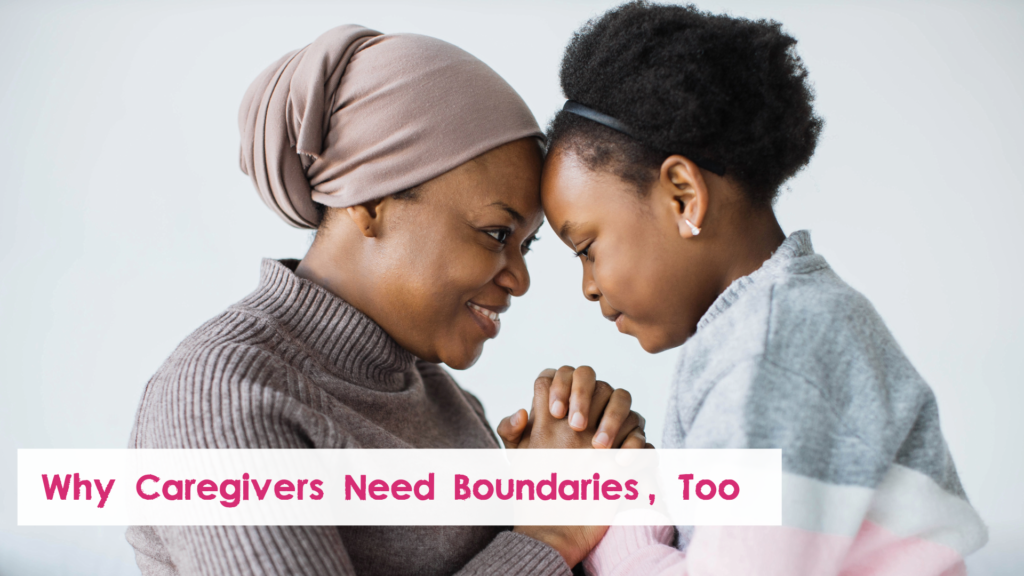
When people talk about caregiving, they often focus on compassion, sacrifice, and showing up for the people we love. Those things matter. As a sickle cell caregiver, I understand them well. What we don’t talk about nearly enough is the importance of boundaries.
For many years, I believed that being a good caregiver meant always being available, always saying yes, and always putting someone else’s needs ahead of my own. I thought that was what love looked like. Over time, I learned a difficult lesson: caregivers need boundaries, too.
What Burnout Looked Like for Me
As the mother of a child living with sickle cell disease, I became accustomed to being on call at all times. Pain crises don’t happen on a schedule. Doctor appointments, hospitalizations, insurance issues, school meetings, and medication management can quickly consume every corner of your life.
At first, I didn’t recognize the signs of burnout. I was exhausted, but told myself that was normal. I felt overwhelmed, but convinced myself that other caregivers had it harder.
I stopped prioritizing my own interests, my own goals, and even my own health because there was always something more urgent demanding my attention.
Eventually, I realized I was running on fumes. I was mentally exhausted, emotionally drained, and struggling to find joy in things that once energized me.
My body was showing signs of stress, and my patience was wearing thin. I loved my family deeply, but I was no longer taking care of myself.

Why Boundaries Felt Uncomfortable
The idea of setting boundaries felt selfish at first.
Many caregivers carry a sense of responsibility that can be difficult to put into words. We know what can happen when our loved one doesn’t receive the support they need. We know the consequences of missing appointments, overlooking symptoms, or failing to advocate.
Because of that, saying “no” can feel uncomfortable.
I worried that setting boundaries would make me seem unavailable or uncaring. I worried that people wouldn’t understand. I worried that I was somehow failing in my role as a caregiver.
The truth is that boundaries are not walls. They are guidelines that help us protect our time, energy, and emotional well-being. Boundaries don’t mean we care less. They help us care more sustainably.
What Changed When I Started Saying No
One of the most powerful words I learned to use was “no.”
No, I can’t take on another responsibility right now.
No, I need time to rest.
No, I cannot solve every problem for everyone.
At first, it felt uncomfortable. Then it felt freeing.
I started protecting time for activities that restored me. I spent more time outdoors. I focused on my own goals and creative projects. I made space for friendships, personal growth, and moments of quiet.
Most importantly, I stopped feeling guilty for taking care of myself.
What surprised me was that the world didn’t fall apart when I established healthier boundaries. In fact, I became more present, more focused, and more capable of handling the challenges that came with caregiving.
How Boundaries Helped Me Become a Better Caregiver
Boundaries didn’t make me a less committed caregiver. They made me a better one.
When I was no longer operating from a place of constant exhaustion, I had more patience during difficult moments. I could advocate more effectively. I could think more clearly when making important decisions.
I had more emotional capacity to support my daughter and the rest of my family.
Caregiving is often described as a marathon, not a sprint. Marathons require pacing. They require hydration, rest, and recovery. The same is true for caregivers.
You cannot continually pour from an empty cup and expect to thrive.
Setting boundaries has allowed me to show up as a stronger caregiver, a better advocate, a more present wife and mother, and a healthier version of myself.
Podcast Invitation
If you’ve ever struggled with caregiver burnout, guilt, or the challenge of prioritizing yourself while caring for someone else, you’re not alone.
These are conversations we need to have more often.
On the Walking With Warriors: SCD Podcast, I share honest reflections about caregiving, mental wellness, advocacy, and the lessons I’ve learned along the way.
My hope is that these conversations help caregivers feel seen, supported, and encouraged.
Recommended Reading
Two books that helped me better understand the importance of healthy boundaries are:
- Set Boundaries, Find Peace by Nedra Glover Tawwab
- The Book of Boundaries by Melissa Urban
Both offer practical tools for protecting your peace, communicating your needs, and building healthier relationships.
Listen to the Podcast
Listen to the Walking With Warriors: SCD Podcast:
bit.ly/47bKeuN
Because caregivers deserve support, too.